

Why Uniform Spraying Is No Longer Enough
For decades, growers have applied crop protection products uniformly — every tree, row, or block receives the same dose regardless of actual need. Yet crops are rarely uniform. Variations in canopy density, pest and disease pressure, microclimate, and growth stage mean much of that spray is wasted, either overdosed, under-dosed, or applied where it is unnecessary. This leads to higher costs, environmental impact, and suboptimal results.
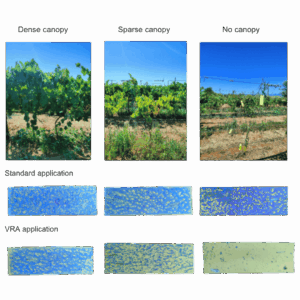
Variable-Rate Application (VRA) addresses these issues by adjusting spray volume to match actual crop conditions. By doing so, growers can reduce chemical and input usage and minimize drift and off-target losses. They can also maintain or improve efficacy by targeting where it is most needed and lower crop stress and damage from over-application. Most importantly, the approach generates valuable data insights to refine future treatments.
VRA as a Service: Why It Matters
VRA is more than a technology; it is a service that provides ongoing value to growers. Effective VRA services involve capturing detailed crop data, analyzing variability using advanced algorithms, and executing precise spray adjustments in real time. Delivered as a service, VRA becomes a continuous cycle of monitoring, recommendation, application, and refinement, helping growers build insights, improve consistency, and operate more sustainably.
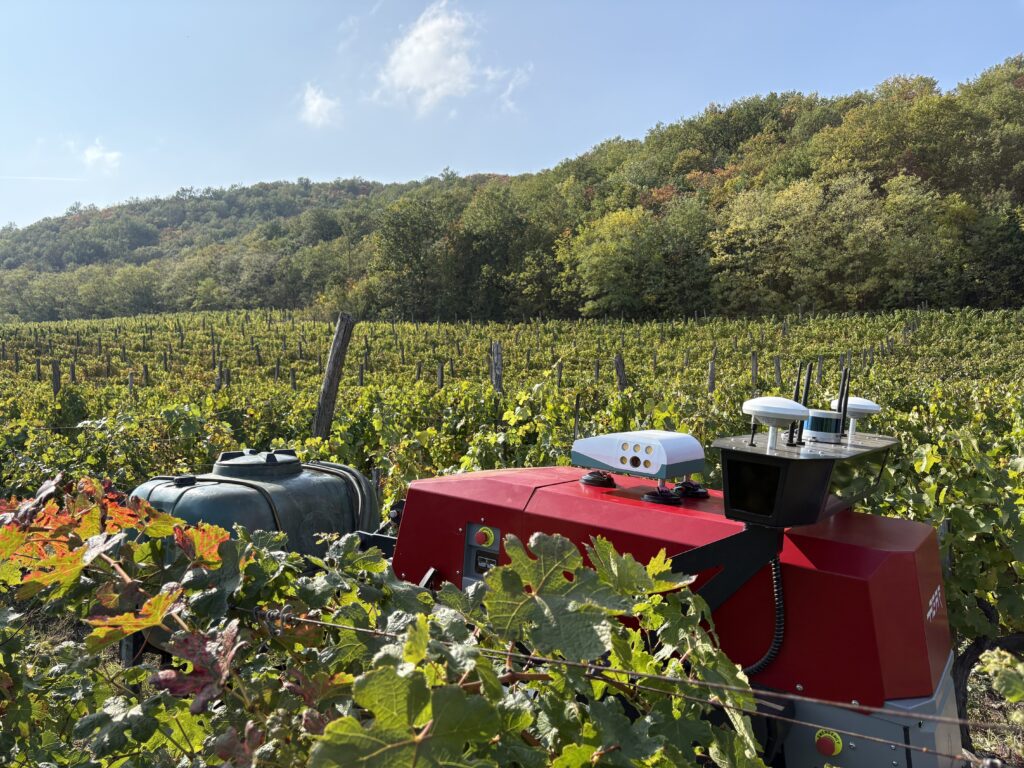
Modern ground-based systems, such as Viewer, enhance this service by communicating seamlessly with already certified sprayer controllers. This compatibility ensures that real-time recommendations are automatically translated into accurate spray adjustments, enabling growers to maintain precision without additional hardware integration in scenarios like missing trees (gaps), headlands (row ends), dead trees and other heterogeneities in vegetation.
What Growers Gain from VRA
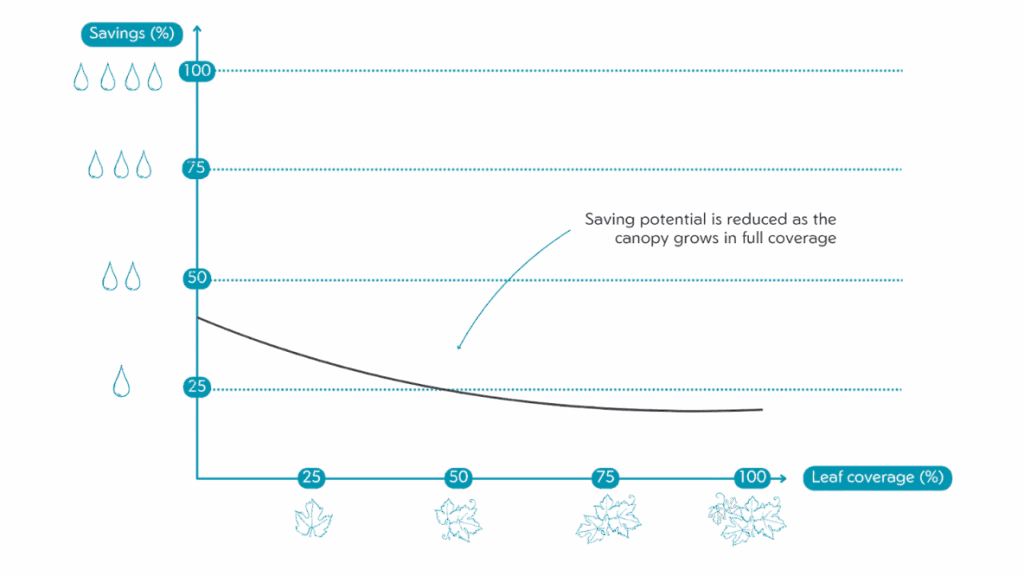
Variable-rate application delivers measurable benefits. Growers can achieve significant reductions in chemical and input use—often in the range of 10–30%—which translates to substantial financial savings and lower production costs, often allowing the technology investment to pay for itself within a few seasons. This overall reduction in chemical use also means that each tank can cover a larger area, resulting in fewer refillings needed to spray a farm and thereby saving valuable time and labor costs. Targeted application reduces drift and waste, improving environmental compliance, while precise dosing minimizes crop damage risks. Furthermore, the data collected provides actionable insights for better long-term planning, operational efficiency, and optimized resource allocation. Actual results vary depending on crop type, field conditions, and system setup.
Implementing VRA Successfully
Successful implementation of VRA depends heavily on how easily the technology can be integrated into daily farm routines. Viewer has been designed precisely with this in mind. Its tractor-mounted cameras scan the canopy in real time and communicate directly with certified sprayer controllers, ensuring that recommendations translate instantly into precise adjustments. This eliminates the need for additional hardware, complex calibration, or lengthy setup processes. Operators benefit from intuitive visual outputs that clearly show what the system detects, helping them trust the data and recommendations while reducing the training curve. Because Viewer is powered directly by the tractor, it works continuously without battery limitations, and its durability allows use in all weather conditions, even at night. These features make it a practical, scalable pathway for growers to adopt variable-rate spraying across orchards and vineyards, standardizing precision practices as part of everyday operations.
The Future of Smart Spraying
Variable-Rate Application isn’t just a tool — it’s a game-changer. As VRA services and ground-based monitoring become more widespread, agriculture moves toward precision protection practices. Solutions like Viewer demonstrate how technology can support these services, but the fundamental advantage comes from the practice itself: applying the right amount, in the right place, at the right time, with full visibility into crop health and variability.
Importantly, VRA also delivers substantial financial benefits. By reducing chemical usage, minimizing waste, and optimizing yield, growers can see significant cost savings season over season. The efficiency gained from precision spraying can improve profit margins while lowering operational costs, making VRA not only a sustainable choice but also a smart economic decision, as it enables farmers to get the most value from every euro they invest.
So, the future of spraying is clear: precision, efficiency, and sustainability, all rolled into one. For growers ready to leave waste and guesswork behind, tools like Viewer aren’t just convenient — they’re a ticket to smarter, more profitable, and more responsible farming. Spray smarter, not harder, and watch your operation thrive.
Would you like more information about the technology and the supported crops? Contact us!
Want to know the full list of provided services? Find it here!